
'As the markets are expected to remain jittery in the near term, we advise investors to use this opportunity to enter quality largecaps from a long-term perspective.'

Prime Minister Narendra Modi on Friday conveyed to Ukrainian President Volodymyr Zelenskyy during a meeting that India would continue to do everything within its means to support a peaceful solution to the Ukraine conflict and that the way to peace is through 'dialogue and diplomacy'.

India's annual infrastructure output growth slowed to a three-month low of 2.4 percent in Decembe

The 38-year-old made his international debut in 2010 in an ODI against Australia in Visakhapatnam and his last India game was also a 50-over match, against Bangladesh in 2022.
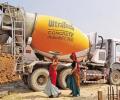
UltraTech Cement's third quarter of financial year 2023-24 (Q3FY24) performance saw a combination of 6 per cent year-on-year (Y-o-Y) volume growth and 8 per cent revenue growth coupled with better realisations per tonne. The earnings before interest, taxes, depreciation, and amortisation (Ebitda) stood at Rs 3,250 crore and Ebitda per tonne was Rs 1,191. Profit after tax (PAT) was reported at Rs 1,780 crore. Other income dipped and interest costs rose.
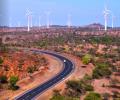
Road awards were muted in Q1FY25. But the pace will accelerate with a bidding pipeline of Rs 1.1 trillion (September 2024), mostly dominated by HAM (Hybrid Annuity Model) projects, which contribute 47 per cent and engineering procurement and construction or EPC projects, which have about 36 per cent share. Hence, infrastructure companies mostly reported revenue decline on a year-on-year (Y-o-Y) basis in Q1FY25.

Adani group opened a $1.2 billion copper plant, bought a port in Odisha, raised stakes in a cement company and stitched an alliance with rival Mukesh Ambani's Reliance Industries, all in a matter of one week in signs that the apples-to-airport conglomerate has shrugged off the Hindenburg effect and is back to rapid expansion spree. In the last one week, Adani group has through regulatory filings and press statements announced expansions and investments in its mainstay ports business, diversification into metal refining, fund infusion into a two-year-old cement foray and continuing progress in the commissioning of its mega solar project.

'Whether I am optimistic or pessimistic is not the issue; I am just going by the evidence available.' 'The Indian economy and financial sector are now well-placed and very resilient in dealing with any kind of spillover coming from the external world.'
The core infrastructure industries had expanded by 5.2 per cent in the previous month.

'I believe that as we produce more, our cost will come down further. We will maintain our competitiveness.'

The Rs 85,000 crore (Rs 850 billion) domestic cement industry is fast realising the painful situation it is getting into, as the GDP growth rate is on a slippery path and over 70 million tonnes of fresh capacities are in the pipeline in the next two years.

The output of eight core industries increased 4.2 per cent in April, boosted by higher electricity, fertiliser and cement production.
During April-June this fiscal, the core industries grew by 4.8 per cent compared to 3.5 per cent in the corresponding period the previous year. Cement production increased by 12.8 per cent in June against 6.6 per cent a year ago, while coal production rose by 14.7 per cent during the month against 6.1 per cent in June 2008.

Reliance Industries Ltd, India's most valuable company, on Friday reported a 5 per cent drop in its June quarter net profit as lower fuel cracks and petrochemical margins outdid gains in telecom and retail businesses. The oil-to-retail-to-telecom conglomerate's consolidated net profit was at Rs 15,138 crore, or Rs 22.37 per share, in April-June -- the first quarter of the current 2023-24 fiscal year -- compared to Rs 16,011 crore, or Rs 23.66 a share, earnings a year back, according to a company's statement.

'A struggling actor once came to me and told me there's no work.' 'I said when there's no work, that's when you have a lot of work.' 'He said he didn't understand.' 'I explained that you have to keep reading, watching, writing, traveling.' 'It is like riyaaz for an actor.'
The six core industries grew by 2.8 per cent in May 2009 against 3.1 per cent in the same month last year on improved production in cement, coal and electricity.The growth rate of six core industries -- crude oil, petroleum refinery products, coal, electricity, cement and finished steel -- was 4.3 per cent in April.

The output of eight infrastructure sectors registered a growth of 3.6 per cent in March 2023, the slowest in five months, showed government data released on Friday. The output of core sectors had increased by 7.2 per cent in February 2023 and 4.8 per cent in the year-ago month. The previous low was 0.7 per cent in October 2022.

Growth of eight key infrastructure sectors rose to 8 per cent in July 2023 compared to 4.8 per cent in the same month last year on expansion in production of coal, crude oil, and natural gas, according to the official data released on Thursday. Production of steel, cement and electricity also grew in July, the data showed.
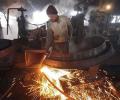
Production of eight infrastructure sectors recorded an almost flat growth rate of 6 per cent in February as against 5.9 per cent in the same month last year, according to official data released on Friday. The growth in February is lowest in the last three months. The output of core sectors had increased by 8.9 per cent in January 2023 and 7 per cent in December 2022.

'Though one cannot paint the entire microcap basket with the same brush, investors need to be careful now as to what they're buying.'
India's economic growth slowed to a 15-month low of 6.7 per cent in April-June 2024-25, mainly due to poor performance of the agriculture and services sectors, government data showed on Friday. The gross domestic product (GDP) expanded by 8.2 per cent in the April-June quarter of 2022-23. India, however, remained the fastest-growing major economy, as China posted a 4.7 per cent growth in April-June 2024.

Government-owned Life Insurance Corporation of India (LIC) has seen substantial gains from its investments in Adani group shares, which have experienced a significant recovery over the past year. The value of LIC's stake in Adani group companies surged by 51.6 per cent, or Rs 22,591 crore, reaching Rs 66,388 crore as of Friday's close. This compares to Rs 43,797 crore on May 31 last year, according to stock exchange data.

L&T surprised on the upside of consensus due to stronger-than-expected growth overseas. The Q1FY25 results were ahead of estimates on both revenue and net profit fronts. The company reported a 15 per cent year-on-year (Y-o-Y) growth in revenues along with 15 per cent Y-o-Y growth in operating profit and 12 per cent Y-o-Y growth in net profit on consolidated basis.
Infra segment, refinery product impacted the most, even as contraction narrows in latest month.

Always interesting, DMK politics is going to get even more absorbing in the days to come, predicts Aditi Phadnis.

These three industries might offer a roller-coaster ride and stocks would have to be held for a significant time.
Exasperated at repeated price rises by cement companies and complaining of a cartel by the latter, the Builders Association of India has announced a plan by its members to establish at least three factories to produce the key building material.
The growth rate in the production of eight key sectors slowed down to a 20-month low of 0.1 per cent in October on account of contraction in the output of crude oil, natural gas, refinery products, and cement, according to the official data released on Wednesday. In October last year, these sectors expanded by 8.7 per cent. In September this year, the core sectors' output growth stood at 7.8 per cent.

The output had expanded by 4 per cent in March 2014.

The Adani family, led by Chairman Gautam Adani, is the most valued first-generation family business at Rs 15.44 trillion.

'The scheme excludes tractors, light commercial vehicles, and medium and heavy commercial vehicles.'
The Gujarat government has given its green signal to Nirma Ltd's controversial cement plant in Mahuva.

'If the period between 1991 and 2014 was about laying the foundations and building the runway, the period from 2014 to 2024 has been about the aircraft taking off.'
Infrastructure sector grew by 6.7 per cent during April 2006 compared to six per cent in the same month last year, largely on the back of a surge in oil refining and cement production.

From the Sensex basket, Larsen & Toubro, Maruti, Reliance Industries, Nestle, Bharti Airtel, UltraTech Cement, Kotak Mahindra Bank and JSW Steel were among the major laggards. Bajaj Finance climbed nearly 1 per cent higher.
India on Monday announced the results for the country's first critical mineral auction. Amid the tepid response from big players, the list of successful bidders included some lesser known names. A total of five companies secured bids for six critical mineral blocks of graphite, manganese, phosphorite, lithium, and rare earth elements with auction premiums ranging from 13.05 per cent to 400 per cent.
Production of eight infrastructure sectors increased by 5.4 per cent in November against a 3.2 per cent growth in the same month last year on a better show by coal, fertiliser, steel, cement and electricity segments, according to the official data released on Friday. Crude oil, natural gas and refinery products, however, recorded negative growth in November this year. The production growth of eight key sectors slowed down to 0.9 per cent in October.
.jpg)
In the fiscal year ended March, infrastructure output grew 3.2 per cent compared with 5 per cent in 2011/12.

Had you invested Rs 10,000 each in JSW Steel, Titan Company and Bajaj Finance 20 years ago, when they were just penny stocks (trading below Rs 10), you would have become a millionaire by now.
Infrastructure growth declined marginally to 4.7 per cent during December 2005 from 4.8 per cent a year ago, largely on account of a sharp decline in crude oil output and poor performance in power sector.
